


5 Accessible Guided Hikes Near Zion National Park
Table of Contents
Why Guided Hikes Make Accessible Exploration Possible
Zion Hikes for Limited Mobility: What Accessibility Really Means
Five Guided Hiking Tours Near Zion Compared
Riverside Walk: Paved and Scenic
Pa'rus Trail: Low-Impact River Loop
Canyon Overlook Trail: Short Elevation Gain
Timber Creek Overlook: Accessible Viewpoint
Red Reef Trail: Low-Elevation Scenic Route
Easy Hikes Near Zion National Park for Families and Beginners
Mobility-Friendly Hiking Trails Near Zion: Planning Your Visit
What to Expect on a Guided Hike: Customization and Support
Frequently Asked Questions
Last Updated: October 21, 2026
Why Guided Hikes Make Accessible Exploration Possible
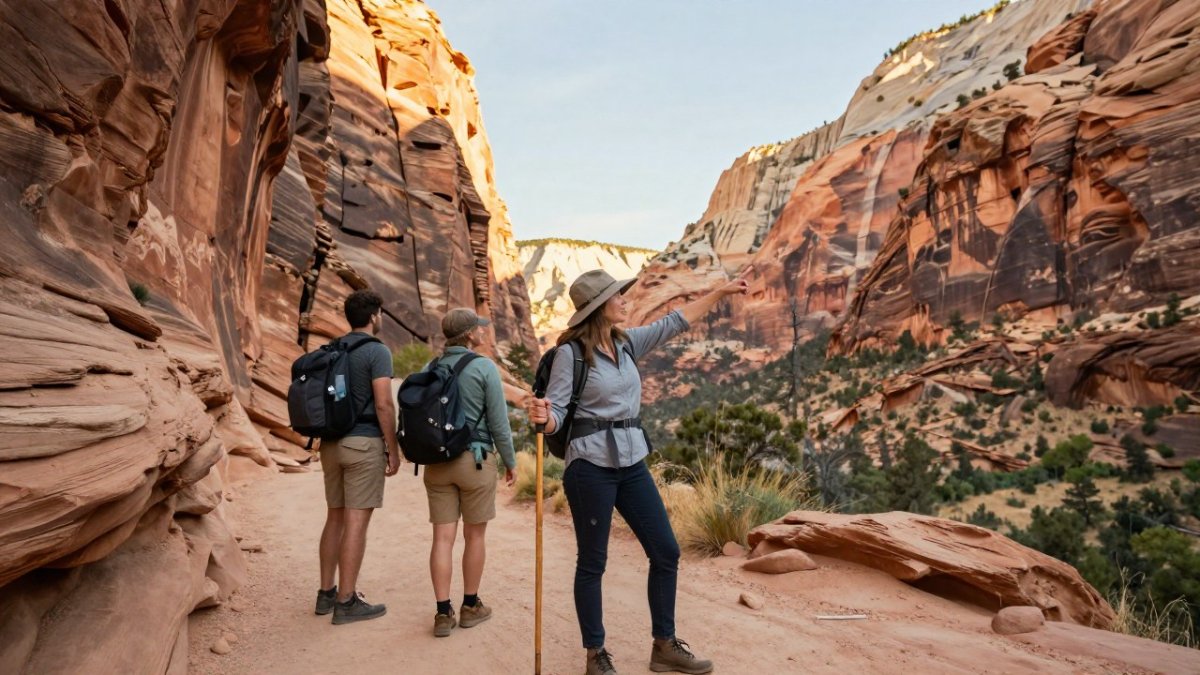
Accessible guided hikes transform how people experience Zion National Park, especially those with mobility challenges or limited hiking experience. A guide adapts the pace, route, and support to match your abilities rather than forcing you into a one-size-fits-all group experience.
At Land Beyond Zion, we've seen firsthand how the right guide unlocks trails that solo visitors might skip or struggle with. The difference isn't just safety, it's confidence. When someone knows a guide understands their needs, they explore further and enjoy more.
Guided hikes near Zion offer real advantages:
Customized pacing, guides adjust speed to your fitness level, not a preset schedule
Route flexibility, if a trail proves too steep or crowded, your guide reroutes on the spot
Accessible information, guides explain geology, history, and ecology in ways that enhance the experience
Built-in support, assistance with footing, pacing, or rest breaks happens naturally, not awkwardly
Crowd avoidance, guides know quieter times and alternative routes that bypass peak congestion
The best guided hikes near Zion balance accessibility with genuine adventure. You're not stuck on a paved loop if you want more challenge, and you're not forced into scrambling if you prefer easier terrain.
Zion Hikes for Limited Mobility: What Accessibility Really Means
Accessibility isn't a single category, it's a spectrum. Understanding the difference between accessible, low-impact, and merely easy hikes helps you choose correctly.
Accessible hikes remove barriers entirely.
Low-impact hikes involve gentle terrain and short distances but may include unpaved sections, minor elevation changes, or uneven footing.
Easy hikes are simply shorter or flatter than moderate routes. They're accessible to beginners and families but don't specifically accommodate mobility devices or chronic conditions.
The confusion matters because many park guides lump all three together. Land Beyond Zion distinguishes between them because the experience is completely different.
When evaluating guided hikes near Zion, ask directly: Is this paved or unpaved? What's the elevation gain? Are rest areas marked? Can guides assist with footing if needed?
Five Guided Hiking Tours Near Zion Compared
These five accessible guided hikes near Zion represent the most realistic options for visitors with limited mobility, families, and first-time hikers. Each offers distinct advantages and suits different needs.

Trail Name | Distance | Elevation Gain | Surface | Best For |
Riverside Walk | 2 miles round trip | 50 feet | Paved | Mobility devices, wheelchairs |
Pa'rus Trail | 3.5 miles round trip | 50 feet | Paved | Families, low-impact fitness |
Canyon Overlook Trail | 1 mile round trip | 160 feet | Unpaved | Beginners, short hikes |
Timber Creek Overlook | 1 mile round trip | 150 feet | Unpaved | Scenic viewpoints, limited time |
Red Reef Trail | 1.5 miles round trip | 100 feet | Unpaved | Easy access, fewer crowds |
Riverside Walk: Paved and Scenic
Riverside Walk is the most accessible guided hike near Zion for people using mobility devices. The paved surface accommodates wheelchairs, walkers, and canes without adaptation. The trail hugs the Virgin River, offering constant water views and shade from canyon walls.
Distance is short, just 2 miles round trip, but the scenery justifies every step. Towering red cliffs frame the river. In spring, wildflowers bloom along the path.
Elevation gain is negligible: only 50 feet over the entire route. No scrambling, no uneven terrain. Rest benches appear frequently. Parking is steps from the trailhead. Guides often pair Riverside Walk with a scenic drive or shorter second trail because it finishes quickly.
The main limitation: crowds. Riverside Walk is the most popular accessible hike near Zion, especially mid-morning. Guided groups often start early or visit during shoulder seasons to avoid peak traffic.
Pa'rus Trail: Low-Impact River Loop
Pa'rus Trail offers a longer accessible guided hike near Zion for people seeking more distance without difficulty. The full 3.5-mile loop takes most visitors 90 minutes to two hours, making it ideal for building endurance without strain.
This paved trail winds along the Virgin River through Zion Canyon. Unlike Riverside Walk, Pa'rus provides more solitude because many visitors don't know it exists.
Elevation gain matches Riverside Walk, only 50 feet total, but the longer distance makes this a better low-impact hike for fitness-focused visitors. Families appreciate the manageable length and gentle grade.
Parking fills less quickly than Riverside Walk, and the trail feels quieter. Guides can control the pace more easily on Pa'rus because fewer crowds force stops. A guided hike here emphasizes pacing and rhythm rather than dodging other visitors.
Canyon Overlook Trail: Short Elevation Gain
Canyon Overlook Trail is the best accessible guided hike near Zion for beginners seeking a modest challenge. This 1-mile round trip climbs 160 feet but spreads the elevation gain across the entire route, avoiding steep pitches.
The trail switchbacks gently through piñon and juniper forest before emerging at a dramatic overlook. From the viewpoint, you see Bridge Mountain and the Zion Canyon floor. The vista rewards the modest effort.
The unpaved surface requires sturdy footing but isn't technical. No scrambling, no handholds needed. People with mild balance concerns or limited hiking experience often gain confidence here. The short distance means a failed attempt doesn't feel like wasted time.
Guides use Canyon Overlook to introduce nervous hikers to trail hiking. The accomplishment of reaching the overlook builds momentum for longer guided hikes on future visits.
Timber Creek Overlook: Accessible Viewpoint
Timber Creek Overlook Trail delivers a scenic viewpoint in just 1 mile round trip with 150 feet of elevation gain. This unpaved route suits people wanting a quick, rewarding hike without major exertion.
The trail climbs gradually through mixed forest, then opens to a viewpoint overlooking Timber Creek Canyon. The vista spans multiple red rock formations. On clear days, visibility extends miles.
Parking is less crowded than canyon-floor trails. The quieter setting appeals to visitors seeking solitude or a guided experience without overwhelming groups. Guides often combine Timber Creek with a second accessible hike near Zion because the short duration allows time for another route.
The main drawback: the trail can be rocky underfoot. People with ankle instability or those using mobility aids may find this more challenging than paved alternatives.
Red Reef Trail: Low-Elevation Scenic Route
Red Reef Trail is an underrated accessible guided hike near Zion, offering scenic payoff with minimal elevation gain. This 1.5-mile round trip climbs only 100 feet while delivering red rock views and fewer crowds than mainstream trails.
The trail starts in the park's East Entrance area, away from the main canyon. This location means parking is easier and the atmosphere feels quieter. The route winds through red sandstone formations, offering excellent photography opportunities and geological interest.
Red Reef works well for visitors who've already completed Riverside Walk or Pa'rus Trail and want something slightly different without major difficulty. Guides appreciate this trail because it provides flexibility, you can extend the hike or keep it short depending on group energy.
The unpaved surface is well-maintained but requires basic hiking footwear. People using mobility devices should stick with paved options like Riverside Walk or Pa'rus Trail.
Easy Hikes Near Zion National Park for Families and Beginners
Easy hikes near Zion extend beyond the five guided options above. Understanding the full landscape helps you choose trails matching your actual ability and preferences.
The Watchman Trail offers a 3-mile round trip with 368 feet of elevation gain. It's labeled "easy to moderate" but feels harder than Riverside Walk because the elevation compounds over the distance.
Emerald Pools Trail has three separate sections, allowing visitors to hike only the lower pool (1.5 miles) or continue to upper pools. The lower section is genuinely easy and popular with families.
Observation Point Trail is often listed as easy online, but that's misleading. The 8-mile round trip and 2,000 feet of elevation gain make it moderate to strenuous.
When evaluating easy hikes near Zion, verify distance and elevation gain independently. "Easy" varies wildly by fitness level and hiking experience.
Mobility-Friendly Hiking Trails Near Zion: Planning Your Visit
Successful mobility-friendly hiking requires advance planning. Start by honestly assessing your abilities.
Assess your realistic capacity:
How far can you walk comfortably without rest?
Do you use mobility aids (cane, walker, wheelchair)?
Do you have joint pain, balance concerns, or fatigue issues?
Have you hiked before, or is this your first time?
What's your elevation tolerance? (Some people manage distance well but struggle with climbing.)
Choose the right season:
Spring and fall offer moderate temperatures and lower crowds than summer. Winter brings occasional snow and ice. Summer heat stresses people with mobility limitations. Shoulder seasons (late April through May, September through October) often provide ideal conditions.
Plan logistics carefully:
Arrive early to secure accessible parking
Bring more water than you think you'll need
Wear supportive footwear appropriate to the surface (paved vs. unpaved)
Schedule rest breaks before you feel exhausted
Know the turnaround point, it's okay to stop short
Consider a guided experience:
Guides handle logistics and pacing, freeing you to focus on enjoyment. They know which trails work best for specific limitations. They can adjust on the fly if a route proves harder than expected. For many visitors with mobility challenges, guided hikes near Zion transform what's possible.
What to Expect on a Guided Hike: Customization and Support
A quality guided hike differs fundamentally from group tours. Understanding what customization actually means helps you choose wisely.
Real customization means:
Your guide asks about your abilities and limitations before the hike
The route adjusts based on your actual pace, not a preset schedule
Rest breaks happen when you need them, not at predetermined intervals
Your guide carries extra water, first aid, or other supplies if you need support
The experience prioritizes your comfort over covering a specific distance
Generic group tours typically:
Follow a fixed route regardless of group fitness
Stick to a rigid timeline
Offer limited flexibility for individual needs
Treat all visitors as similarly able
Land Beyond Zion prioritizes customization because guided hikes near Zion work best when they match your specific situation. A guide who listens to your concerns and adjusts accordingly creates a fundamentally different experience than a guide who follows a standard script.
Before booking any guided hike near Zion, ask directly: How do you customize for individual needs? What happens if someone struggles? Can you adjust the route or pace? Clear answers reveal whether a guide truly offers customization or just uses the word.
Exploring Zion's trails should feel possible, not intimidating. Our customized guided hikes near Zion focus on what matters: your comfort, safety, and genuine connection with the landscape. Book Tours with Land Beyond Zion and discover trails you thought were out of reach.
Frequently Asked Questions
Are there accessible hiking trails near Zion National Park?
Yes. Several trails near Zion National Park offer accessible options for visitors with limited mobility. Riverside Walk and Pa'rus Trail are fully paved and require minimal elevation gain. Canyon Overlook Trail, Timber Creek Overlook, and Red Reef Trail provide scenic views with manageable difficulty levels. Guided hiking tours can be customized to match your specific mobility needs and abilities, making exploration comfortable and safe.
What should I ask a hiking guide about accessibility?
Ask about trail surface type (paved, dirt, rocky), exact elevation gain, distance, estimated hiking time, rest points, and water access. Inquire whether guides can adjust pace or route based on your needs. Confirm what mobility aids are supported and whether guides have experience with your specific situation. Ask about group size and whether tours can be private. Clarify weather impacts and what backup plans exist for accessibility if conditions change.
Can you hire a guide for an accessible hike near Zion?
Yes. Guided hiking tours near Zion are available through providers offering customized experiences. Guides can tailor routes, pacing, and support to your mobility level. Private or small-group tours allow you to move at your own speed without feeling rushed. Guides familiar with accessibility can suggest alternatives if a planned route becomes difficult, and they provide expert knowledge about trail conditions, geology, and history while ensuring your comfort and safety.
How do I choose a hike if I use a mobility aid?
Start by identifying your mobility aid type and how it performs on different surfaces. Paved trails like Riverside Walk and Pa'rus Trail work well for wheelchairs and walkers. Dirt trails with low elevation gain suit canes and crutches. Discuss your specific needs with a guide before booking, they can recommend which easy hikes near Zion National Park match your capabilities. Check current trail conditions, bring water and rest breaks, and choose routes with shorter distances if you tire easily.
Book Tours

Comments